For 70 years, MultiCare Good Samaritan Regional Rehabilitation Center has been increasing patients’ independence, restoring function and preventing complications following a gravely serious injury or illness. To commemorate this anniversary, we’re looking back at where Good Samaritan’s donor-supported rehab services began.
Grounded in holistic care
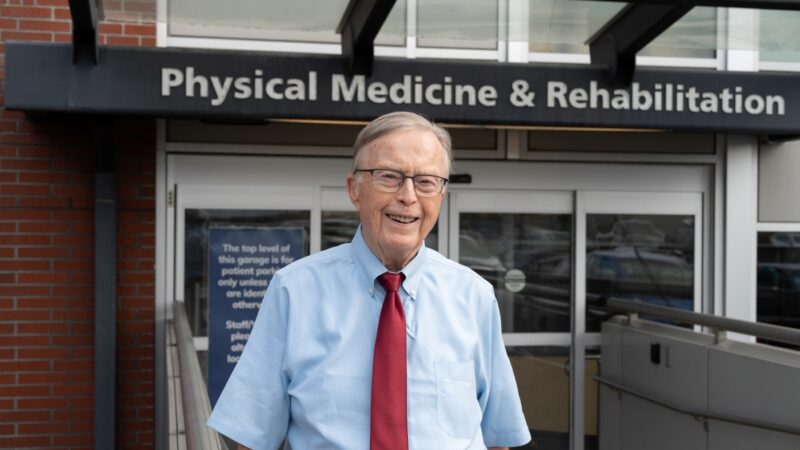
Erv Severtson built and ran Good Samaritan’s psychology department for 20 years and was instrumental in shaping its rehab program.
Erv was born and raised in Minnesota, but higher education brought him to Washington state. At Pacific Lutheran University (PLU), he majored in classical languages and ancient history, served as the student body president his senior year, taught in the psychology department after getting his PhD in clinical psychology, and became the vice president of student life. Erv additionally attended a theological seminary, earning a master’s degree in theology.
His zest for learning and interest in the nervous system’s physiological processes related to behavior and cognition would inform his work at Good Samaritan.
Months after Erv joined the PLU faculty, Sherburne W. Heath Jr., MD, called with an invitation to become the hospital’s psychologist.
“Long before the term was popular, Dr. Heath was holistic,” Erv shares. “He believed that good medicine involved not only the body, but the mind, the emotional well-being — that we should view the person as more than a spinal cord that’s injured or a hemisphere of the brain that’s been pierced by a bullet. It’s the whole person.”
Rehab at Good Samaritan
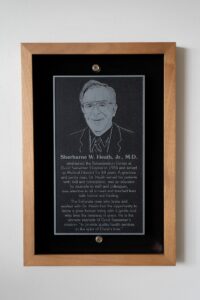
Patients see this plaque honoring Dr. Heath’s legacy when entering the rehab center.
Erv came on board in 1966, initially working one day a week, plus evenings and weekends. Over the next 17 years, he hired staff and added neuropsychology until Good Samaritan was ready to build the new inpatient rehab center.
Together, Erv, Dr. Heath and Hildur Gleason — the center’s first social worker — along with occupational and physical therapy, speech therapy and nursing staff united around a philosophy of treating rehab patients holistically and inclusively.
“Every person at the table had a voice, which was so unique,” Erv shares. “Patients’ families, schools and employers also had a voice. Dr. Heath felt that rehab was not done ultimately in the hospital, in the center, but if that person did not get home and make it back into his or her family, employment, school, community, we had failed.”
Erv’s psychological approach was deeply humanistic as well. He started by doggedly identifying the patient’s strengths — even a flea-flicker response of a muscle — and being honest about weaknesses. Then, Erv collaborated with the patient’s team, listening to their observations and offering his insights to paint a full picture. He would also assist families, answering questions and helping them come to terms with the realities of their loved one’s situation.
Coming full circle
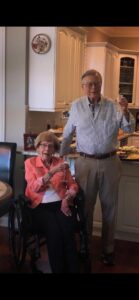
Nancy and Erv Severtson celebrating an anniversary
Decades later, the center would take on new meaning.
In 2015, Erv’s beloved wife Nancy utilized rehab services after suffering a perforated colon and subsequent coma. Because of the care received, including hundreds of hours with a speech pathologist, he and Nancy had four more beautiful years traveling around the country and attending family events before her passing.
Erv himself fell in the shower, severely damaging his spinal cord. While his four extremities shouldn’t be functional, his incredible rehab experience and determined nature helped him defy the odds.
“What captured me and kept me here for 20 years ultimately came back to serve Nancy and gave quality of life to me with only half a spinal cord at the cervical level,” Erv shares.
As a former patient and employee, Erv believes that a donation to the program is a life-changing investment.
“Rehab deals with the whole person as they deal with things that impact the whole being,” he explains. “Because these things require so much in specialized care and often long-term care, if a person wants their dollar to really count in changing lives, I can’t think of a better place to give to.”
Donations ensure continued rehabilitative care, helping members of our community rebuild skills and address activities of daily living following a life-changing event or injury. Give today.