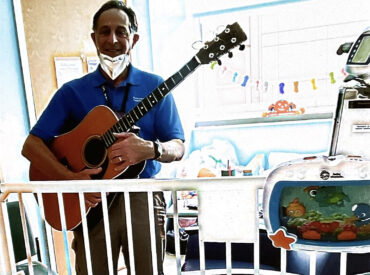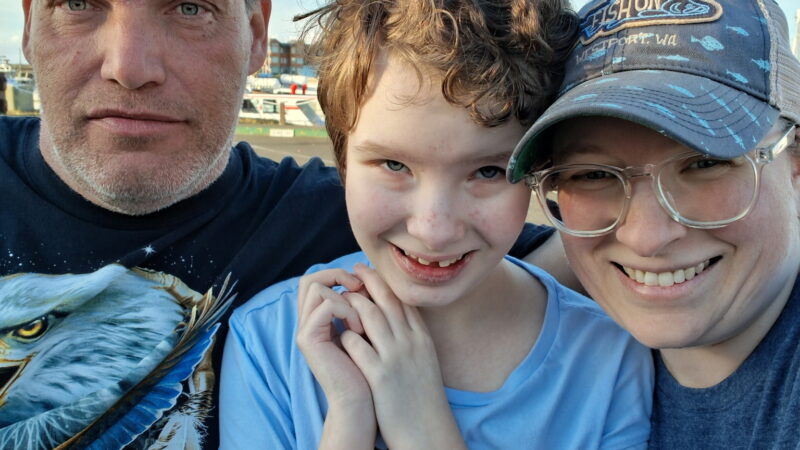
Between 2018 and 2020, Chloe visited MultiCare Mary Bridge Children’s Hospital so often it began to feel like her second home.
The young girl’s gastrointestinal challenges started shortly after she was born in 2014. Mom Heather soon realized their Mason County community lacked the expertise and capacity to serve children with disabilities and feeding issues. Instead, she turned to donor-supported pediatric care two hours away in Tacoma, Washington.
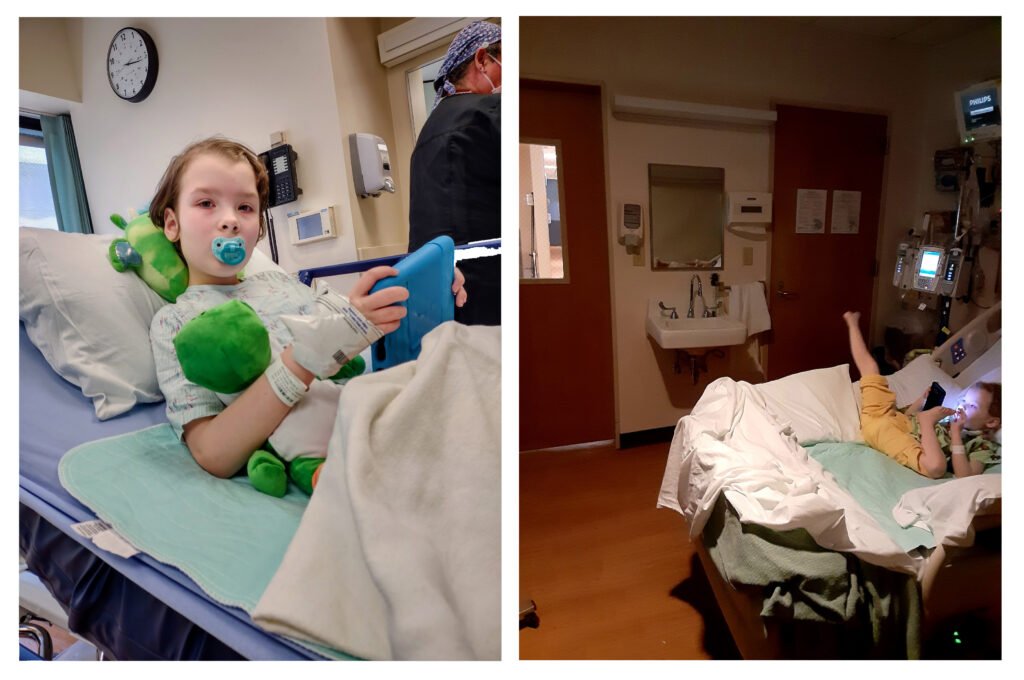
Chloe during various stays at MultiCare Mary Bridge Children’s Hospital
“Mary Bridge is great; I definitely love them,” Heather shares. “They have been very supportive, very helpful. Chloe loved all the nurses and the doctors there.
“They taught me a lot of how to take care of her,” she continues. “Overall, it’s been the best thing for her.”
Answers and empowerment
During a month-long hospital stay, the family met Rohit Gupta, MD, PhD, FAAP, from Mary Bridge Children’s Gastroenterology clinic, who would change the trajectory of Chloe’s life. He determined that her external nasogastric tube — used for temporarily delivering nutrition directly to the stomach — should be removed, and that a surgically implanted gastrostomy (G-) tube was the best long-term solution. In November that same year, Chloe officially became one of Dr. Gupta’s patients. She immediately received a G-tube, a more comfortable and discreet option that allows for larger volumes of food to be administered.
Dr. Gupta was also the first to diagnose her with Crohn’s — a chronic inflammatory bowel disease — finally finding an answer for the years of poor weight gain, difficulty eating and constipation.
“We took a leap of faith, got a stool test,” he recalls. “That led to a colonoscopy, subsequently leading to the diagnosis of Crohn’s disease. And adequate management of her Crohn’s disease has allowed care to be managed as outpatient, putting an end to her repeating hospital admissions.
“Kids who have inflammatory bowel disease frequently will have signs and symptoms,” he continues. “But for Chloe, there weren’t any. And she’s nonverbal, so she couldn’t tell us anything about how she was feeling. If it was not for Mom’s super, super strong advocacy, the diagnosis might have been delayed.”
Heather, for one, will long remember Dr. Gupta’s intuitiveness, gentleness and how he empowered her to collect stool samples when she suspected Chloe had a colon infection.
“I like how they know that I’ve spent the most time with my child, so they know that if I say something is wrong, then they go with it,” she explains. “They take my word for it, because they know that I pretty much know what’s going on.”
Beads to capture a medical journey
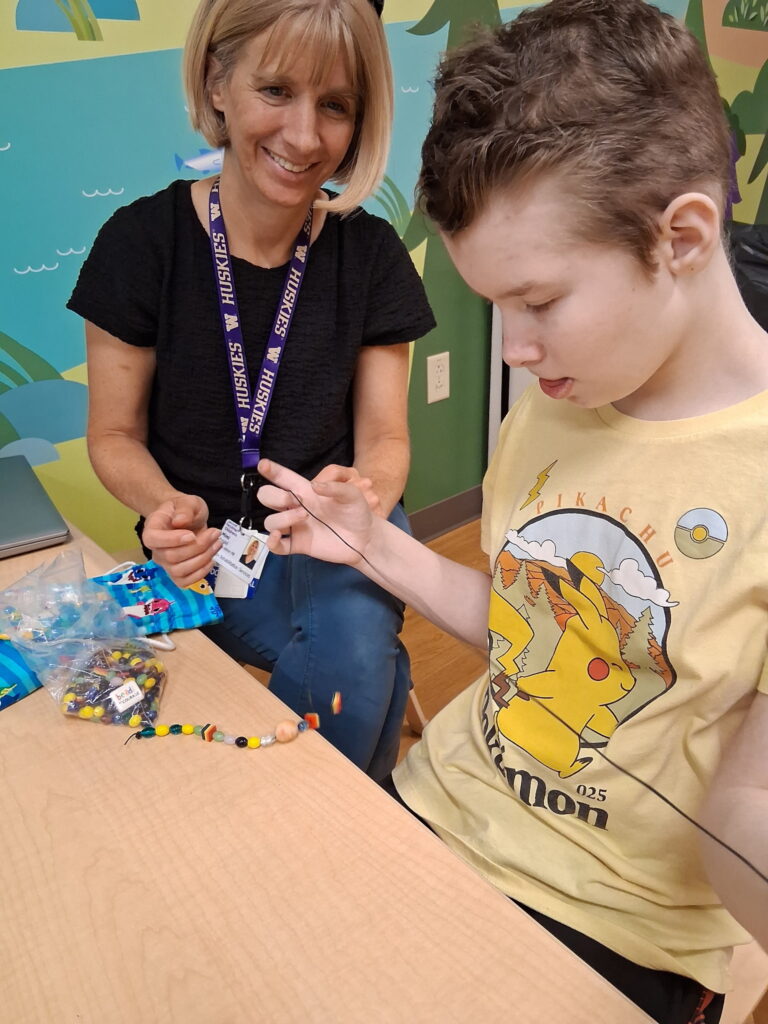
From left, Mimi Knodel, occupational therapist and supervisor, and Chloe string beads
Chloe’s years of hospital procedures, milestones and other medical experiences are represented by an array of colorful, meaningful beads. These glass and clay markers are available to patients navigating serious illness thanks to Beads of Courage, Inc., a program made possible by donations to Mary Bridge Children’s Foundation.
At outpatient occupational therapy — which helps children like Chloe build the skills they need to succeed in everyday life, and is also powered by philanthropy — she regularly adds her beads to ever-growing necklace strings.
“Stringing beads is more than just a fun craft — it’s a mini workout for Chloe’s fine motor skills,” explains Mimi Knodel, occupational therapist and supervisor. “As she carefully picks up each bead, she builds the strength and control in her fingers without even realizing it. Guiding the string through each colorful, uniquely shaped bead challenges her hand-eye coordination and focus, turning playtime into purposeful learning.
“This simple activity helps develop her skills for everyday activities, like opening containers, getting dressed,” Mimi continues. “Stringing beads isn’t just play — each bead is a building block to increasing independence (and is) also a way for Chloe, her family and I to celebrate her courage and accomplishments.”
Mimi’s approach to therapies centers on choice, and Chloe always chooses bead time. Her intellect, engaging personality and playful spirit also shine through art projects and games, which help build skills like writing, coloring, taking turns and socializing.
In addition to occupational therapy, Chloe does monthly physical therapy with physical therapist Meredith Graham Lawver and speech therapy with speech pathologist Natalie Hughes.
“Chloe has progressed so much in her mobility, and she is learning how to make full sentences using her communication tablet,” Heather shares. “Mimi, Mer and Natalie have been very helpful and understanding with Chloe. They’ve become like friends to us.”
Supporting the whole family
While the road to discovering, treating and managing her daughter’s disease has been long and winding, Heather was supported at every turn.
“Mary Bridge Children’s has given us a lot of support when we were going in and out,” she says. “They would give me gas vouchers, because it’s a two-hour drive from where I live. I’m on a low income, and they’ve helped me with food vouchers. They’re not just supportive for the kids. They’re supportive for the family.”
Just as Foundation donors sustain Beads of Courage and fund children’s therapy equipment and programming, community generosity also helps remove barriers to pediatric care like transportation and meals.
“Mary Bridge Children’s is a fantastic institution — we do a lot of good work, and we do cater to a population which is very diverse,” Dr. Gupta says. “We serve many families who are not in good financial situations, and those kids really depend on philanthropy for their health care needs. Every small or big donation goes a long way.”