Julia Brown will never forget finding her husband on the floor on December 20, 2019.
“I was on the phone when I heard a noise, and I found Chris on the floor in the bathroom throwing up,” remembers Julia, co-owner of The Cat & Rabbitt Cake Shop. “I thought it was the flu or maybe a heart attack — I didn’t know what to think. I called 911, and they showed up quickly. His pulse was faint, and he appeared to be unconscious. He was so nauseous that he couldn’t even open his eyes.”
Chris himself recalls finishing up a conference call and walking out of the kitchen when the incident occurred.
“It was like someone plucked a guitar string and took my balance away,” he says. “I sat on the couch, felt better, but then the world started spinning harder. I felt really sick.”
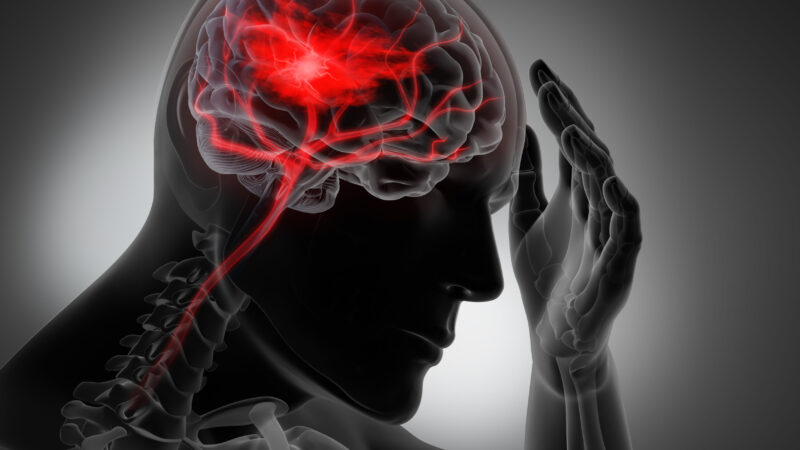
Chris was taken to MultiCare Tacoma General Hospital, where they ran several tests, a CT scan and MRI. Fast-forward 12 hours later, and it was discovered that Chris had suffered a stroke in the posterior cerebral artery. A stroke is the result of a blocked or ruptured blood vessel in the brain.
For many years, the acronym used to identify a stroke was F.A.S.T. — Face drooping, Arm weakness, Speech difficulty and Time to call 911. These signs have since changed to include B.E. — Balance issues and Eye blurring/vision loss. Had these symptoms been recognized initially and had Chris received blood clot-breaking medication earlier on, his healing journey may have been shorter and less intensive.
Today, MultiCare Foundations donors are championing the expansion of stroke care education for hospital staff. With community generosity, nurses and other health care workers will have additional training to help improve outcomes for people with neurological diseases like Chris.
Moving forward at Good Samaritan Regional Rehabilitation Center
Chris’ next leg of the journey included an inpatient stay at MultiCare Good Samaritan Regional Rehabilitation Center.
“I’d heard they’re the best place to go, and they were,” Julia says. “They’re very progressive.”
Chris looks back on the experience as one of slow movement forward.
“In inpatient, I was introduced to these Post-it notes. I had to put them in ABC order, side to side, up and down, and I would have to stop before I made myself sick. But it was a starting point,” he says. “I graduated and worked on balance in physical therapy with a whole lot of getting up and sitting down.”
Along the way, Chris had people like physical therapist Kevin McClellan in his corner.
“I have a vivid memory of Chris, and I really enjoyed working with him; he and his wife are great people,” Kevin shares. “Where I work in MultiCare Good Samaritan Hospital outpatient neurological rehabilitation, we see a lot of strokes. I could talk for days about neuro rehab and what it means for people surviving a stroke.”
Nearly two years later, life isn’t quite back to normal for Chris. But he and Julia are thankful for their care team and those who are invested in increasing stroke education opportunities for staff.
“This was my first time going through an event like this, and I was clueless to what was going on,” Julia says. “But I see that this type of stroke training is incredibly valuable, and we need more training for more departments.”